
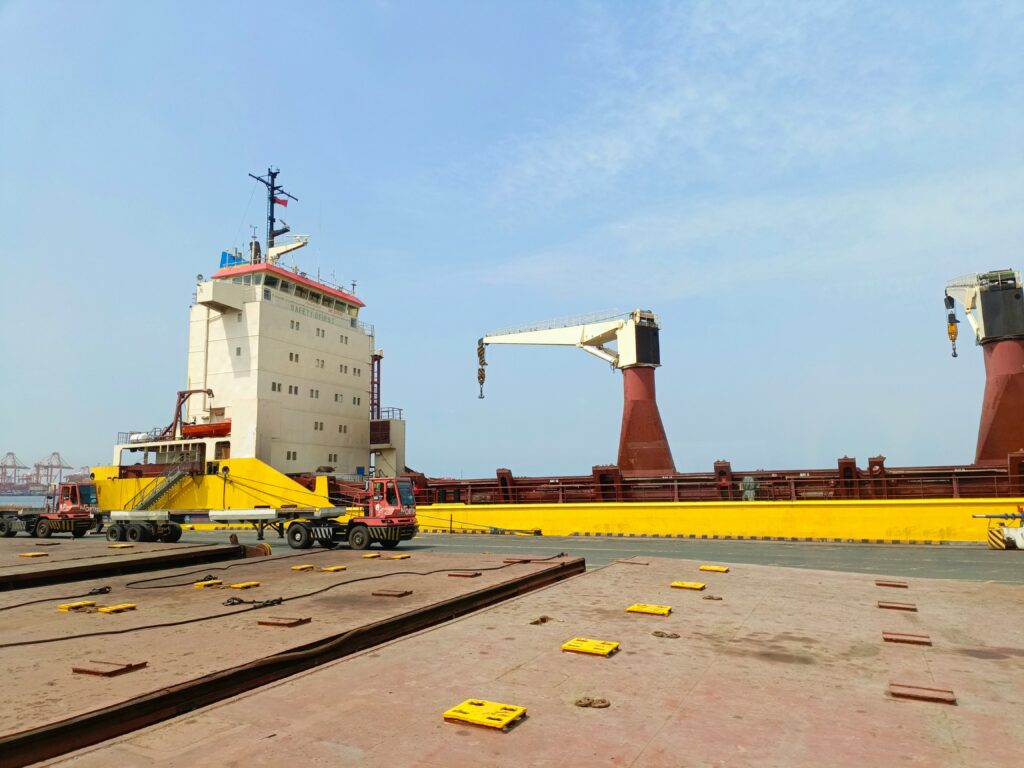
Break bulk cargo shipping from UAE is widely used for transporting oversized, heavy, or non-containerized cargo. Industries such as construction, oil and gas, power, and infrastructure often rely on break bulk shipping when standard containers are not suitable.
The UAE, especially Dubai and Abu Dhabi, plays a major role as a global logistics hub for break bulk and project cargo. However, handling break bulk cargo requires detailed planning, specialized equipment, and strong coordination. Therefore, understanding the process is essential to avoid delays and damage.
This guide explains how break bulk cargo shipping from UAE works, including cargo types, documentation, handling methods, and best practices.
What Is Break Bulk Cargo?
Break bulk cargo refers to goods that are shipped individually rather than in containers. These cargo pieces are loaded, secured, and discharged one by one.
Common examples include:
- Heavy machinery
- Steel structures and beams
- Construction equipment
- Large pipes and cables
- Industrial generators
Because of their size and weight, break bulk shipments need special handling at ports and terminals.
Why Choose Break Bulk Cargo Shipping from UAE?
The UAE offers strong infrastructure and global connectivity. As a result, many companies choose UAE ports for break bulk exports and imports.
Key advantages include:
- World-class seaports and terminals
- Advanced lifting and handling equipment
- Experienced port operators
- Strong connections to Africa, Europe, Asia, and the Americas
For complex shipments, businesses often rely on professional cargo and project logistics services in UAE to manage end-to-end coordination.
Types of Cargo Shipped as Break Bulk
Break bulk shipping is suitable when cargo cannot fit into standard containers.
Typical cargo types include:
- Over-dimensional cargo (ODC)
- Heavy-lift cargo
- Project cargo for infrastructure and energy projects
- Industrial and plant machinery
Each cargo type requires a different handling and securing method.
Step-by-Step Process for Break Bulk Cargo Shipping from UAE
Step 1: Cargo Assessment and Planning
The process starts with a detailed cargo study. Dimensions, weight, center of gravity, and lifting points are reviewed. This step helps decide:
- Vessel type
- Lifting method
- Port equipment requirements
Step 2: Port and Vessel Selection
Next, the appropriate port and vessel are selected. Break bulk cargo usually moves on:
- Break bulk vessels
- Multipurpose vessels
- Heavy-lift vessels
Port selection depends on crane capacity, berth availability, and handling expertise.
Step 3: Packaging and Lashing
Proper packaging protects cargo during transit. Cargo is then lashed and secured using chains, wires, and supports to prevent movement.
Incorrect lashing is a common cause of cargo damage. Therefore, professional supervision is critical.
Step 4: Documentation and Export Clearance
Accurate documentation ensures smooth export clearance.
Common documents include:
- Commercial invoice
- Packing list
- Bill of lading
- Cargo drawings and specifications
Export clearance in UAE is handled efficiently when documents are prepared correctly.
Step 5: Loading and Sea Transport
Cargo is lifted using port cranes or vessel cranes. Each piece is carefully placed and secured on board. During transit, constant monitoring ensures cargo stability.
Step 6: Discharge and Final Delivery
At the destination port, cargo is discharged individually. From there, it is transported to the final site using specialized trailers or barges.
Break Bulk Cargo vs Project Cargo
Break bulk cargo and project cargo are often confused.
- Break bulk cargo focuses on individual oversized items
- Project cargo involves multiple break bulk shipments coordinated under one project timeline
Large infrastructure projects often combine both approaches.
Common Challenges in Break Bulk Cargo Shipping
Break bulk shipments face unique challenges, such as:
- Limited vessel availability
- Port congestion
- Weather-related delays
- Complex lifting operations
Because of these risks, companies benefit from working with logistics partners experienced in project and heavy cargo handling from UAE.
Compliance and Safety in Break Bulk Shipping
Safety is critical in break bulk operations. Cargo handling must follow international maritime safety standards.
Guidelines are influenced by organizations such as the International Maritime Organization (IMO), which sets safety regulations for sea transport.
Following safety procedures reduces accident risks and cargo damage.
Why UAE Is a Strategic Hub for Break Bulk Cargo
The UAE’s location between East and West makes it ideal for break bulk cargo movement. Dubai and Abu Dhabi ports handle large volumes of project and heavy cargo every year.
Because of this, many international companies route break bulk shipments through UAE for better control and connectivity.
Choosing the Right Partner for Break Bulk Cargo Shipping from UAE
Break bulk cargo shipping requires coordination between ports, vessel operators, surveyors, and transporters. Therefore, selecting the right logistics partner is crucial.
Experienced partners help with:
- Cargo planning and engineering
- Port and vessel coordination
- Documentation and customs clearance
- Safe loading and delivery
For complex shipments, businesses often rely on integrated cargo logistics and handling services in UAE to ensure smooth execution.
Break bulk cargo shipping from UAE is a reliable solution for oversized and heavy cargo when handled correctly. However, it requires careful planning, technical expertise, and strong coordination.
If you are planning a break bulk cargo shipment from UAE, consult with a UAE-based logistics expert to ensure safe handling, compliance, and timely delivery.